Almost all the coffee you drink comes from two species: Coffea arabica and Coffea canephora, usually called Robusta. They differ in where they grow, how the beans look and how they taste.
At a glance
| Arabica | Robusta | |
|---|---|---|
| Altitude | Usually from around 1,000 m up | Lower, warmer regions |
| Caffeine | Lower (around 1–1.5%) | Higher, often close to double Arabica |
| Bean shape | Long, flat, S-shaped centre cut | Small, round, straight centre cut |
| Flavour | Bright acidity, fruit, florals, caramel | Bold, bitter, cocoa, wood, roasted nuts |
| Body | Light to medium | Heavy, syrupy |
| Best for | Pour-over, lighter espresso, black | Phin, milk coffee, espresso with thick crema |
Why does Vietnam grow so much Robusta?
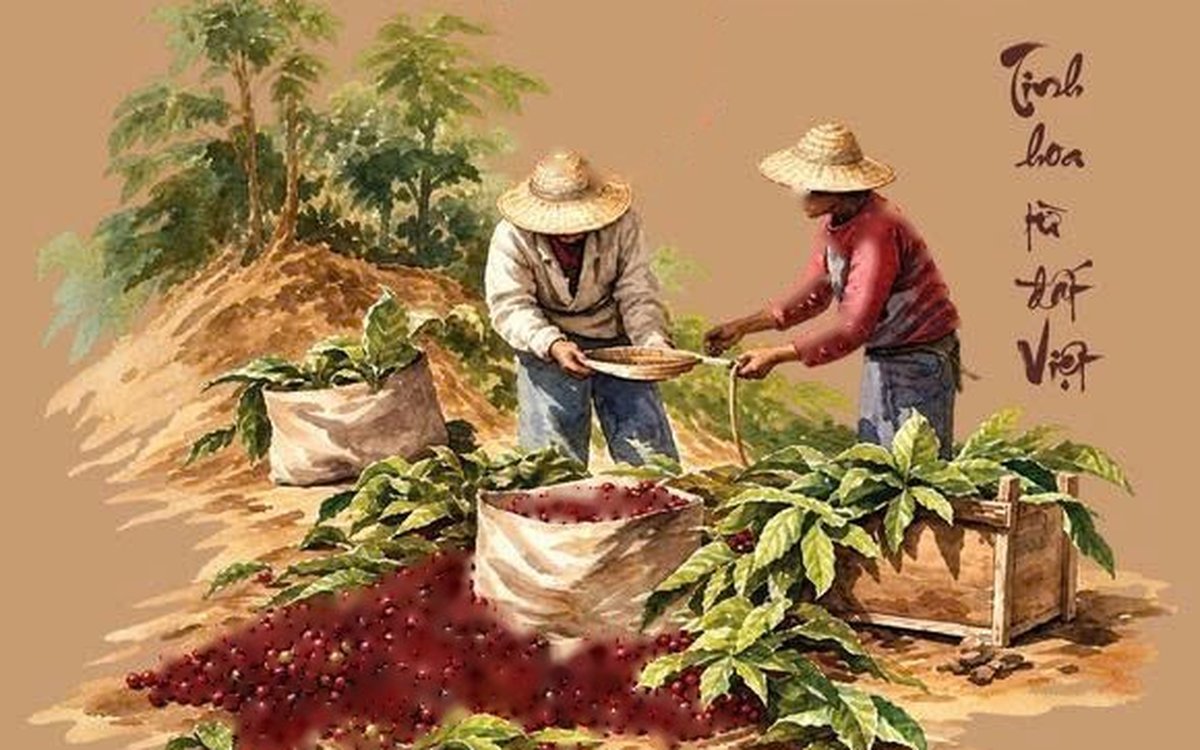
Vietnam is one of the world's largest coffee producers, and most of its harvest is Robusta. The hot, humid climate and red basalt soil of the Central Highlands (Đắk Lắk, Gia Lai, Đắk Nông, Lâm Đồng) suit the Robusta plant well. Its bold bitterness is also the backbone of phin coffee and cà phê sữa đá.
Vietnamese Arabica grows in cooler, higher areas such as Cầu Đất (Lâm Đồng), Sơn La and Khe Sanh (Quảng Trị). There is less of it, but it is increasingly prized for its aroma and gentle acidity.
And what is "Culi"?
Culi (peaberry) isn't a separate species. It is a bean that grew alone in the coffee cherry, round instead of the usual flat-sided pair. Culi can be Arabica or Robusta and is often sorted out because the round beans roast evenly and taste more intense.
Which should you choose?
- You like it strong, bitter and with milk: Robusta or a Robusta-heavy blend.
- You drink it black and want aroma and gentle acidity: Arabica.
- You want balance: a blend, for example 70% Robusta and 30% Arabica for the phin, strong but more aromatic.
The species, origin and blend of each 1021 coffee are listed in the specifications on its product page.