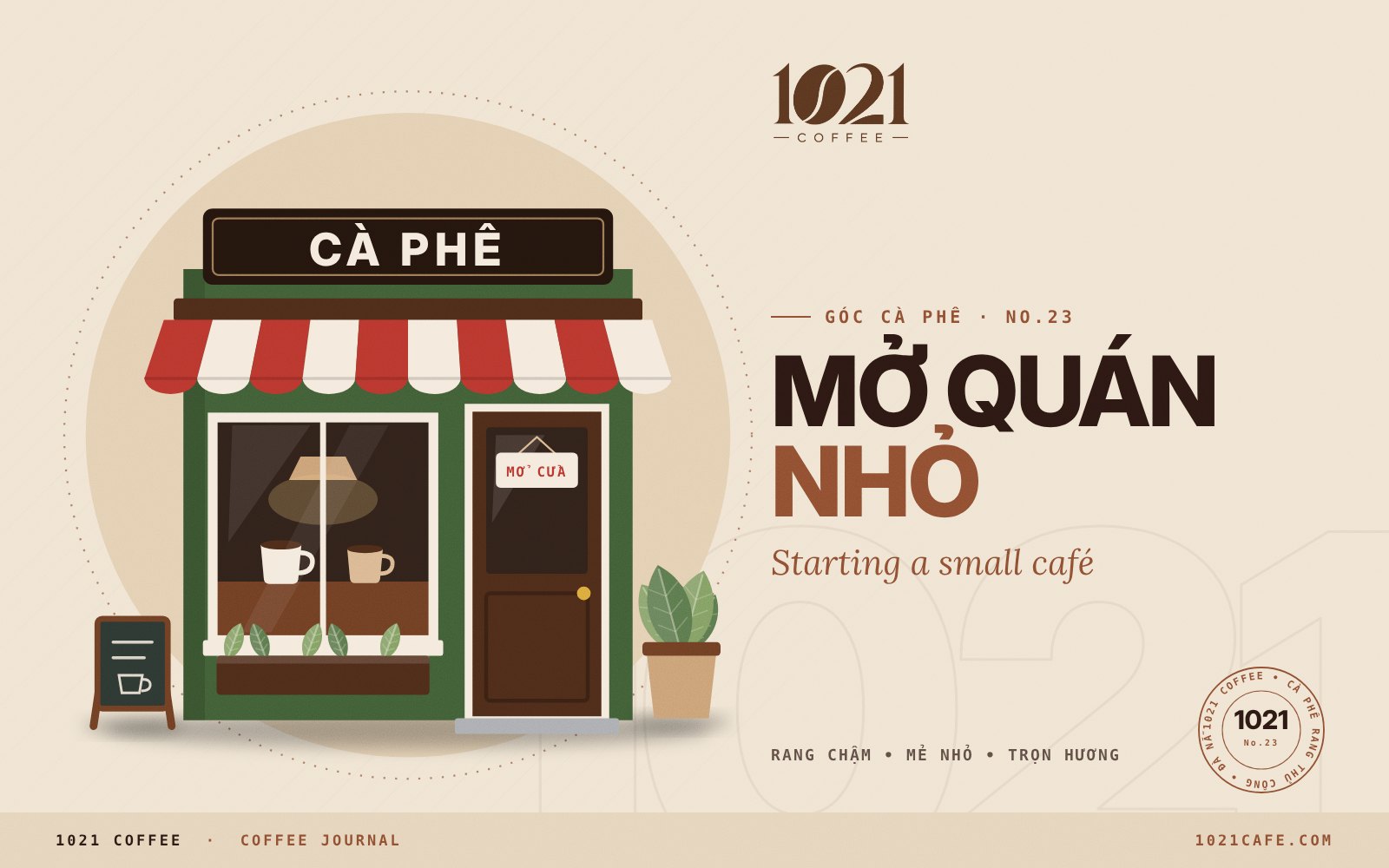
A small café, with a handful of tables, one bar and an owner who doubles as the barista, is a dream for a lot of people. It is also a real business, with rent, utility bills and quiet afternoons. This piece can't replace a business plan, but it gathers the questions worth answering before you sign a lease.
Start with your customers, not your machine
Before you choose an espresso machine or a paint colour, picture who will sit in your café and when. Office workers in the morning want speed and takeaway. Students want long stays, sockets and Wi-Fi. Visitors are curious about Vietnamese coffee. Each group points to a different menu, price level and layout.
The cheapest research is simply watching. Stand near the space you're considering at different times of day, count the people walking past, and note when nearby cafés get busy and what they sell most.
Paperwork and regulations
The exact steps depend on your size, business type and location, and they change over time. In general, owners need to look into:
- Business registration in a suitable form, for example a household business or a company.
- Food safety: the premises, where ingredients come from, and the health and training of the people making drinks.
- Fire safety, plus rules on premises, signage and use of the pavement.
- Tax registration and reporting.
The safest route is to ask the local business registration office and your ward or commune People's Committee directly, or to work with a reputable consultant, before you spend money on the fit-out.
Equipment and beans
In a small café, spend in the right places rather than buying everything. A basic list usually looks like this:
- A good grinder. It shapes the cup as much as the brewer does.
- Phin filters, or an espresso machine if your menu really needs one.
- A 0.1 g scale, a temperature-controlled kettle and a timer.
- A reliable supply of filtered water and clean ice.
- A fridge for milk and other ingredients.
Your beans matter as much as your gear. You want a flavour that suits the menu, batches that taste the same and a supplier who delivers on time. See choosing beans for your café.
Money: plan carefully now, worry less later
Keep three things separate: the start-up investment, the fixed monthly costs (rent, wages, utilities) and the cost of each cup. From there, work out how many drinks you need to sell each day to break even. Many people in the trade advise keeping a reserve that covers the first few months, because a new café usually takes time to build a base of regulars.
Tip: Test the idea first with a cart, a small kiosk or online sales for a few months. You'll learn which drinks sell and when you get busy before you commit to a big lease.
If you're getting ready to open and would like to try 1021's slow-roasted Vietnamese Arabica and Robusta, get in touch to talk about wholesale supply.