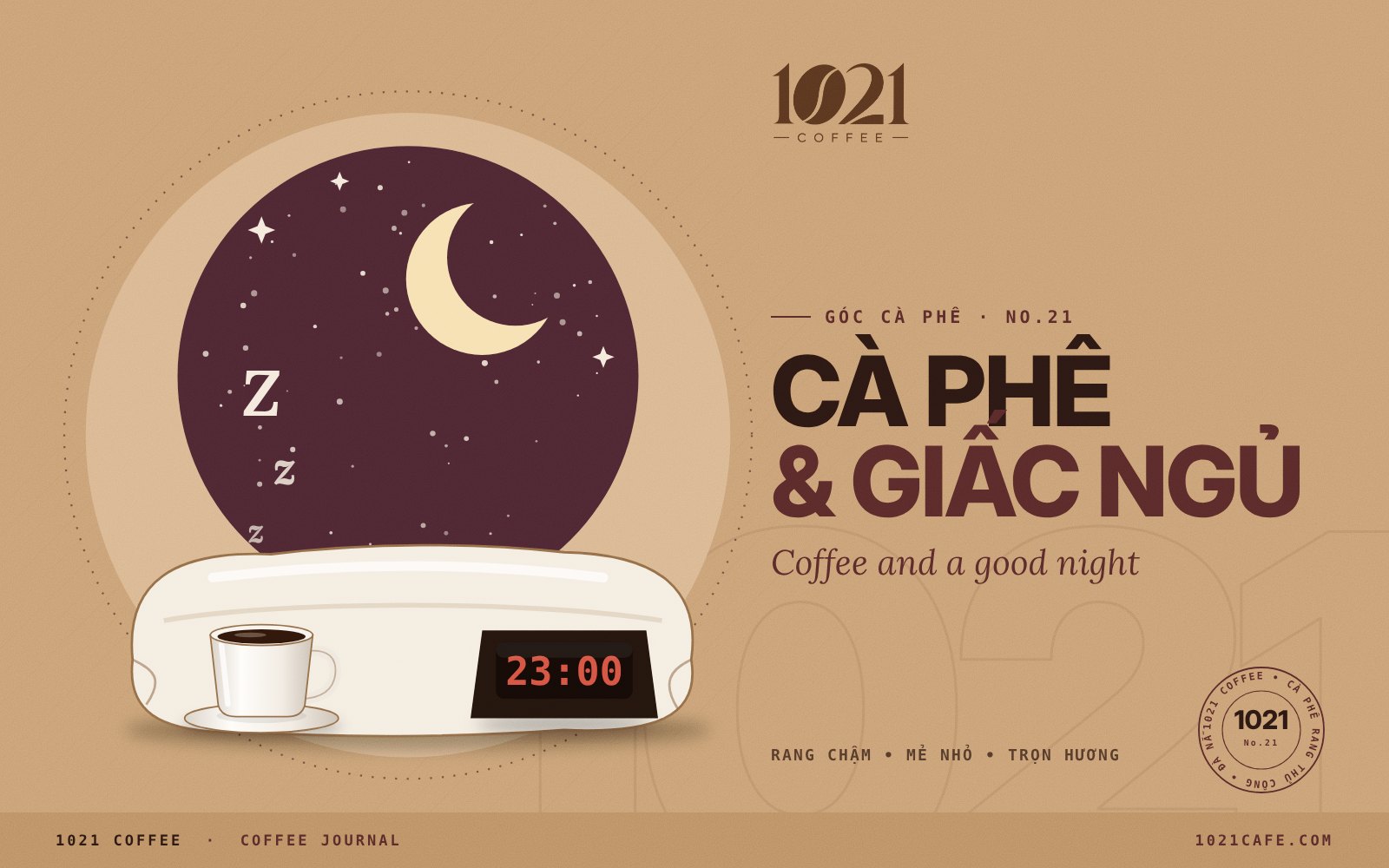
“I can drink coffee at night and still fall asleep.” Plenty of people say it, and it may be true. But falling asleep isn't the same as sleeping well. A little understanding of how caffeine works lets you keep the cup you love without quietly trading away your rest.
What caffeine actually does
Throughout the day your brain builds up a compound called adenosine. The longer you're awake, the more of it there is, and the sleepier you feel. Caffeine is shaped enough like adenosine to sit in its receptors, which temporarily masks that tired signal. Most people feel the lift within about 15–45 minutes.
What people tend to forget is how slowly caffeine leaves. Its half-life, the time it takes for half of it to clear, is usually given as roughly 3–7 hours in healthy adults, and it varies a lot from person to person. So a 3 pm coffee can still be noticeably present when you go to bed at 11.
Asleep isn't the same as rested
Some studies suggest that caffeine taken within several hours of bedtime can make sleep shorter and lighter, even when people don't notice any difference themselves. How much it affects you depends on a few things:
- Your body: some people metabolise caffeine quickly, others very slowly. That's why the same cup hits people so differently.
- The dose: Robusta typically carries close to twice the caffeine of Arabica, and a strong phin can hold more than you'd guess.
- Habit: regular drinkers get used to the buzz, but that doesn't mean their sleep is untouched.
- Other factors: pregnancy and some medications can slow down how fast caffeine is cleared.
Simple habits that help
- Set a caffeine curfew. A common rule of thumb is to stop around 6–8 hours before bed. If you sleep at 11 pm, aim to finish your last cup by about 3–4 pm.
- Strong in the morning, gentle in the afternoon. If you still want an afternoon coffee, make it smaller, weaker, or switch from Robusta to Arabica.
- Watch for hidden caffeine. Tea, milk tea, energy drinks and dark chocolate all contain some.
- Keep a one-week log. Note the time of your last cup and how you feel on waking. Your own observations beat any general advice.
Tip: Craving coffee in the afternoon? A drip bag brewed with a little extra water is usually much lighter than a strong phin, but still tastes like a proper coffee break.
If you've had trouble sleeping for a while, or you still sleep badly after cutting out afternoon coffee, talk to a doctor. Poor sleep has many causes besides caffeine. For more on sensible daily amounts, see our guide to drinking coffee sensibly.