For many of us, the morning coffee is a fixed part of the day. In moderation it can be a perfectly pleasant habit, but caffeine is still a stimulant and people respond to it very differently. Here's what's worth knowing to enjoy coffee sensibly.
This article is for general information only and isn't medical advice. If you have a health condition, are pregnant or take medication, please talk to your doctor.
How much caffeine is OK?
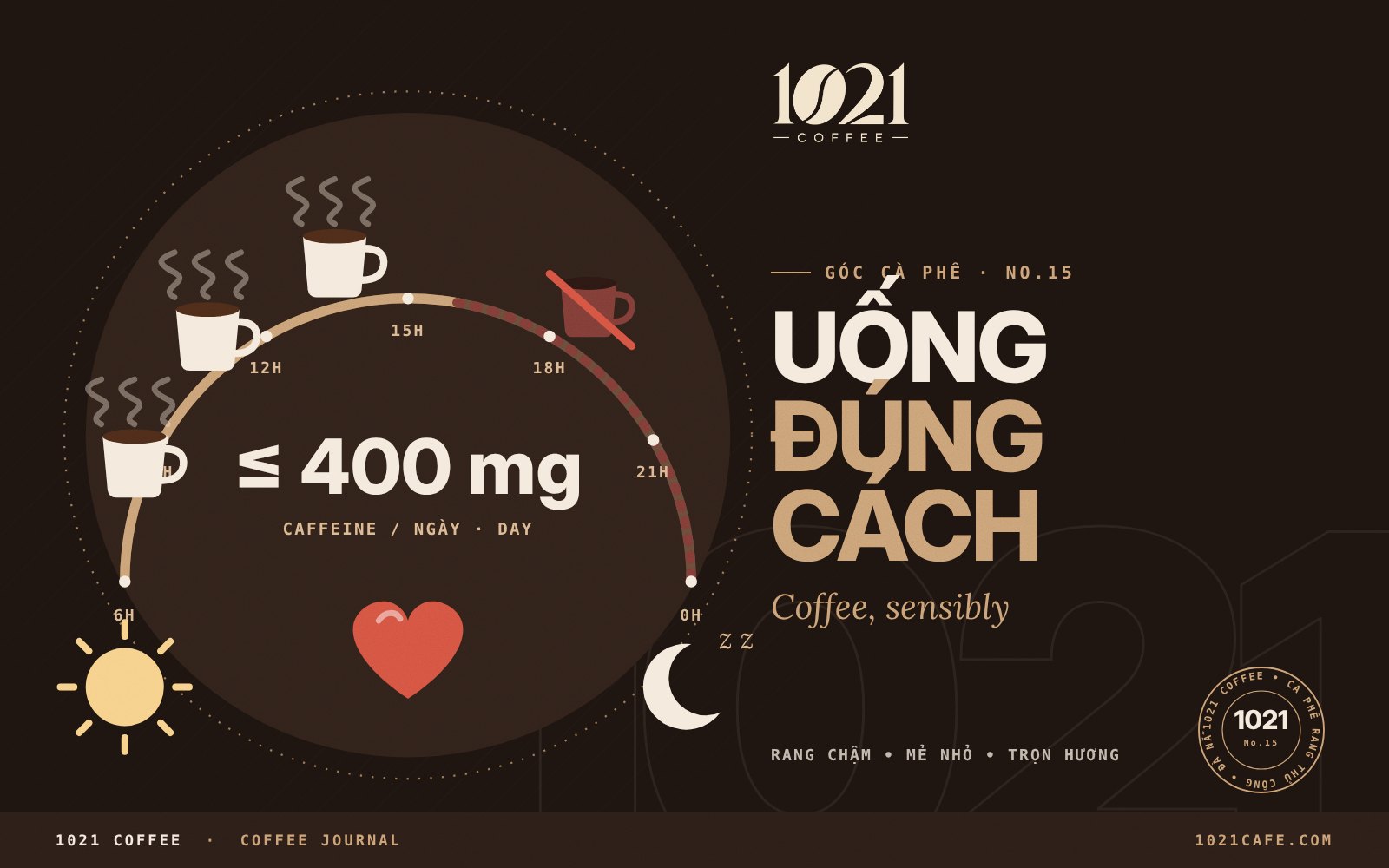
- Healthy adults: the US Food and Drug Administration (FDA) and the European Food Safety Authority (EFSA) both consider up to about 400 mg of caffeine a day generally not to raise safety concerns. EFSA also suggests keeping single doses to around 200 mg.
- Pregnancy: EFSA and the American College of Obstetricians and Gynecologists (ACOG) advise no more than 200 mg a day. EFSA gives the same figure for breastfeeding.
- Children and teenagers: should have much less than adults.
Remember that tea, cola, energy drinks and chocolate contain caffeine too, and it all adds up.
How much caffeine is in a cup?
| Drink | Approximate caffeine |
|---|---|
| Single espresso (about 30 ml) | Around 60–80 mg |
| Filter coffee (about 240 ml, Arabica) | Around 70–140 mg |
| Arabica phin (20–25 g of coffee) | Around 100–200 mg |
| Robusta phin (20–25 g of coffee) | Usually much higher, possibly 200 mg or more |
| Decaf | Very little, usually just a few mg |
These are rough estimates that vary with dose, grind and brewing method. The key point: Robusta has roughly twice the caffeine of Arabica, so one strong Robusta phin can use up a big share of the daily guideline. More in Arabica vs Robusta.
Coffee and sleep
Caffeine's half-life, the time it takes your body to clear half of it, is typically about 3–7 hours in healthy adults, and can be longer during pregnancy or with certain medications. So a 4 pm coffee may still be working when you go to bed. If you struggle to sleep, try to skip coffee for about 6 hours before bedtime.
Signs you're overdoing it
- Jitters, shaky hands, a racing heart.
- Anxiety, irritability, trouble focusing.
- Difficulty falling asleep or restless sleep.
- An upset stomach or headaches.
If you have heart problems, high blood pressure, an anxiety disorder or stomach issues, or take regular medication, ask your doctor how much coffee is right for you.
A few good habits
- Drink plenty of water through the day; coffee isn't a replacement.
- Watch the sugar and condensed milk, especially if you have several milk coffees a day.
- Have it after food if your stomach is sensitive.
- Go smaller in the afternoon. A drip bag usually uses less coffee than a phin.