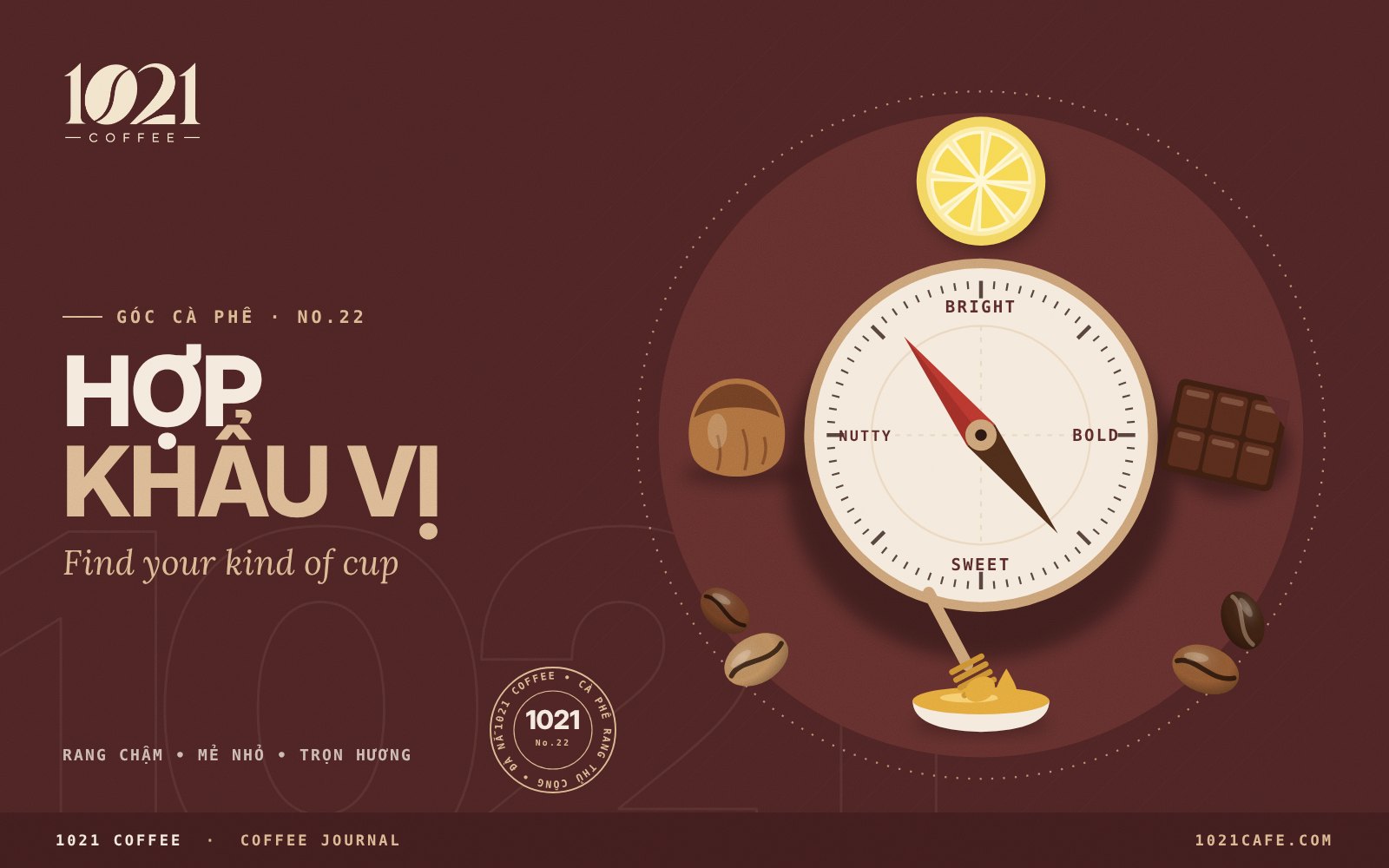
Faced with a shelf of coffee, most of us choose by packaging or by recommendation. Sometimes that works, but often you end up with a bag that is “fine, just not quite me”. The good news: you can predict your taste pretty well from what you already drink every day.
Start from the cup you already love
Ask yourself what you usually order, and what exactly you like about it. The answer tends to point the way:
- You love iced milk coffee, strong and gently bitter: look for a medium to dark roast with Robusta, or an Arabica–Robusta blend. Robusta brings heavy body and cocoa-like bitterness that holds up to condensed milk.
- You drink it black and want it smooth: go for a medium-roast Arabica. Balanced, with caramel and nutty sweetness.
- You enjoy bright, fruity or tea-like flavours: choose a lighter-roast Arabica and brew it as pour over or in a drip bag.
- You want a real wake-up: Robusta typically carries close to twice the caffeine of Arabica, so a little in the blend goes a long way.
If the two species are still a blur, our piece on Arabica and Robusta goes deeper.
Three things that shape the cup
| Factor | Lighter, brighter | Bolder, heavier |
|---|---|---|
| Bean | Arabica | Robusta or a blend |
| Roast | Light to medium | Medium-dark to dark |
| Brew method | Pour over, drip bag | Phin, moka pot, espresso |
Processing matters too (washed coffees often taste clean and bright, naturals sweeter and riper), but for a beginner these three are enough to steer by. For more on roast, see our guide to roast levels.
Taste with a little method
- Change one thing at a time. Keep the brew method and ratio fixed (say 20 g in a phin with about 100 ml of water) and change only the coffee. Change everything at once and you will never know why the new cup tasted better.
- Taste it hot and again as it cools. Acidity and sweetness usually show more clearly around 50–60 °C.
- Jot down a few words. “Harsh”, “smooth”, “lemony”, “burnt sugar”. After three or four bags a pattern appears.
- Buy small first. Once you know what you like, move to a bigger bag to save money.
Tip: If a coffee tastes too bitter, the bean may not be to blame. Grinding too fine, water that is too hot or brewing too long all push a cup towards bitterness. Adjust the brew before deciding it is not for you.
At 1021, Vietnamese Arabica and Robusta are roasted slowly in small batches with nothing added, so what you taste is the bean and the roast. If you are not sure where to start, the shop describes each coffee so you can match it to your taste.