Green coffee beans smell more like grass or dried peas than coffee. Everything you love about a cup, from bright acidity and caramel sweetness to dark cocoa bitterness, is created in the roaster. How far a bean is roasted is one of the biggest factors in how your morning coffee tastes.
What happens during roasting?
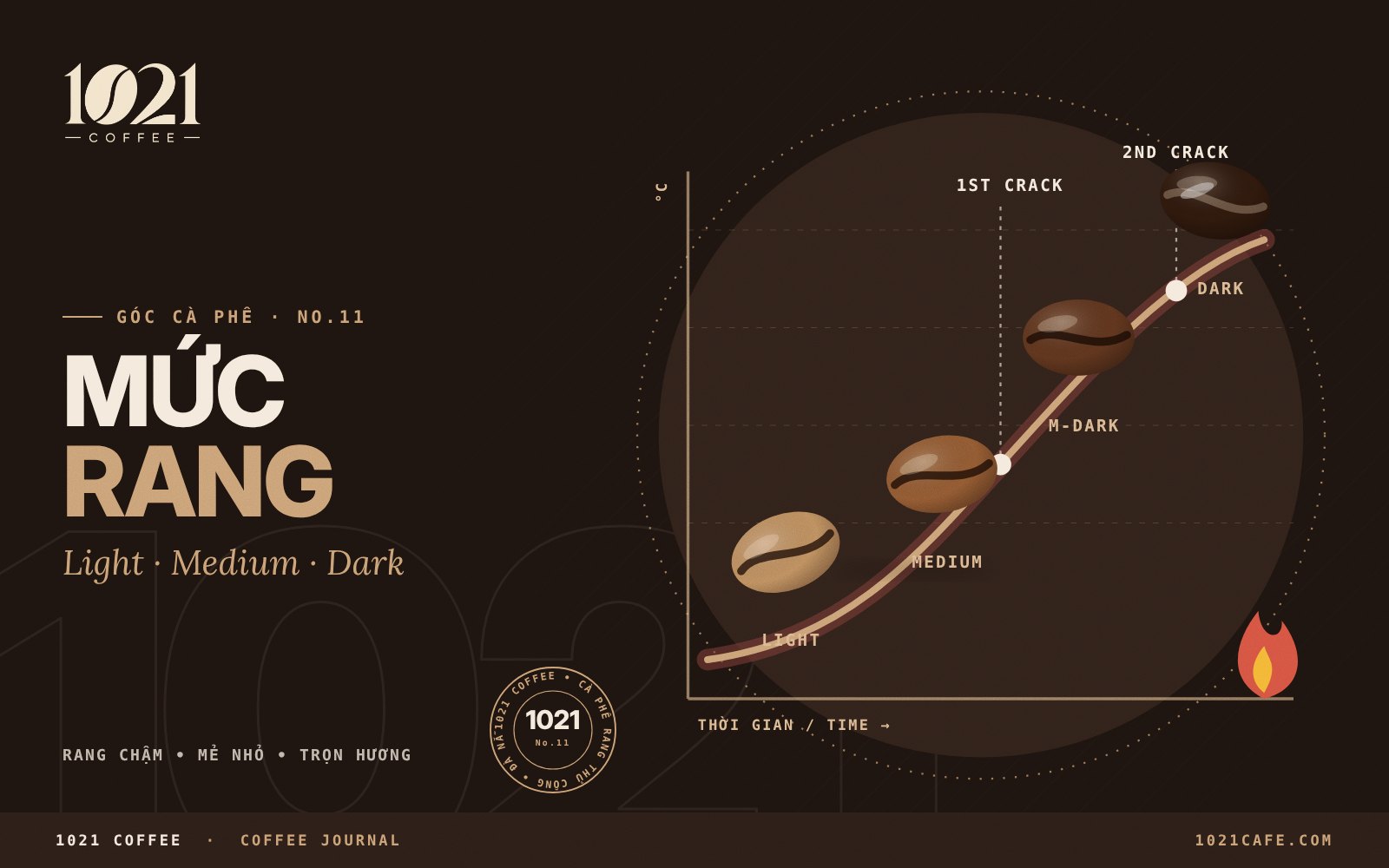
As the beans heat up they lose moisture and turn from green to yellow to brown. Sugars and amino acids react through the Maillard reaction and caramelisation, producing hundreds of aroma compounds. Roasters listen for two key moments:
- First crack: steam and gas inside the bean force it to split with a popcorn-like crackle, usually somewhere around 196–205 °C (the exact reading depends on the roaster and where its probe sits). From here on, the coffee is developed enough to brew.
- Second crack: a quieter, faster snapping as the bean's structure starts to break down, typically around 220–230 °C. Oils begin to appear on the surface.
The three basic roast levels
| Roast | Ends | Colour and surface | Typical flavour |
|---|---|---|---|
| Light | During or just after first crack | Light brown, dry | Bright acidity, florals, fruit, light body |
| Medium | After first crack, before second | Mid brown, little or no oil | Balanced acidity, sweetness and bitterness; caramel, milk chocolate, nuts |
| Dark | Near or into second crack | Dark brown to almost black, oily | Bold bitterness, low acidity, smoke, dark cocoa, heavy body |
The darker the roast, the more the character of the variety and origin fades behind flavours that come from roasting itself. Light roasts show off the bean the most, but underdeveloped coffee tastes sharply sour and grainy.
Does dark roast have more caffeine?
Not really. The bitterness of a dark roast comes mainly from compounds formed during longer roasting, not from caffeine, and caffeine content changes very little between roast levels. Far bigger differences come from the species (Robusta often has close to twice the caffeine of Arabica) and how much coffee you use per cup.
Which roast for which brew?
- Phin and cà phê sữa đá: medium to dark. The bold, heavy bitterness stands up to condensed milk and ice.
- Pour-over and filter: light to medium, to bring out aroma and bright acidity. See our pour-over guide.
- Espresso: usually medium to medium-dark, for sweetness, body and good crema.
- Cold brew: medium and dark roasts give a smooth, cocoa-rich result.
Tip: Light roasts are harder and denser, so they extract less easily. Try slightly hotter water or a slightly finer grind. With dark roasts, letting the water cool for an extra few seconds helps tame harsh bitterness.
Don't trust the label alone
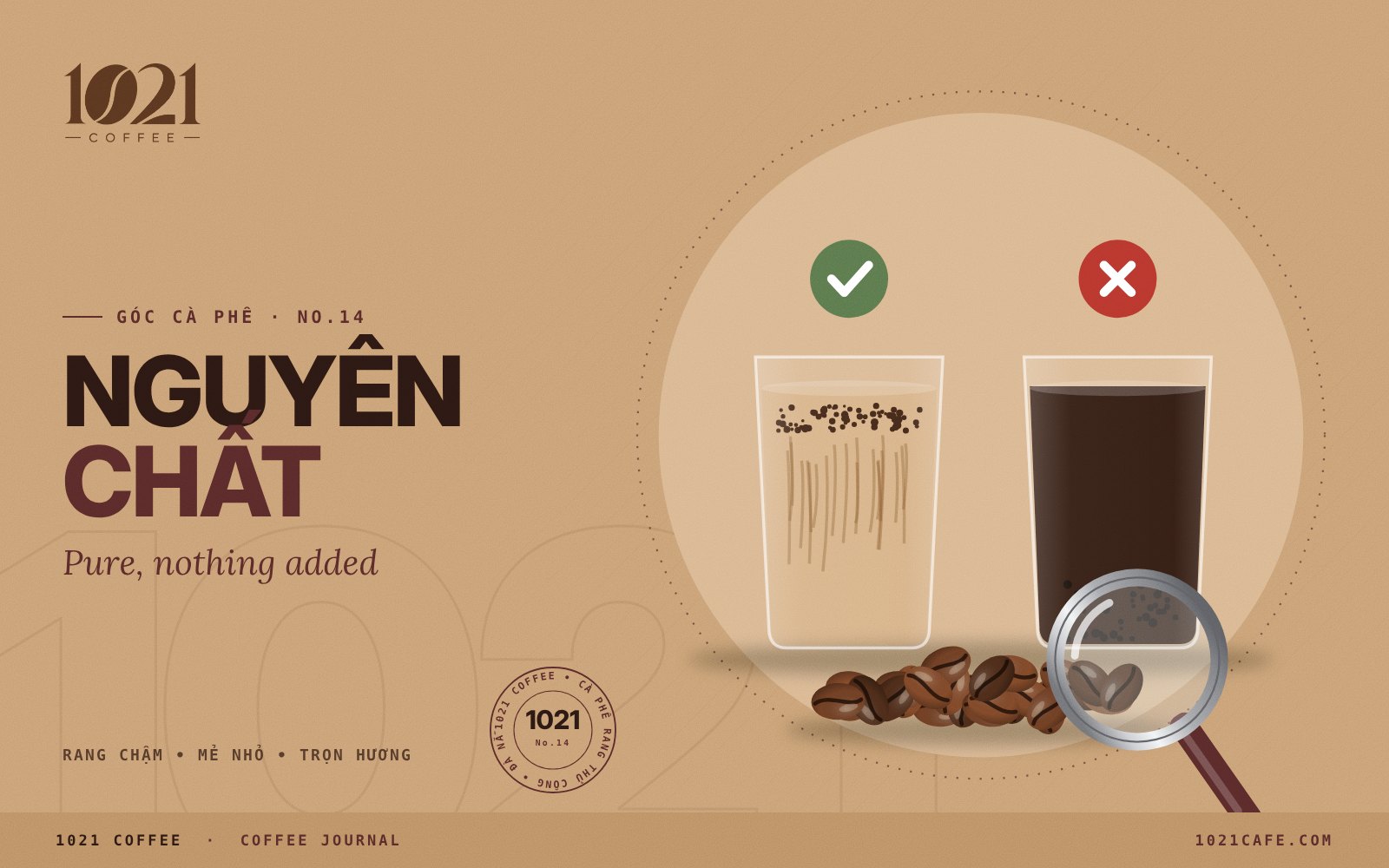
There's no universal standard for roast names, and one roaster's "medium" can be darker than another's. Tasting notes, and your own palate, are a better guide. At 1021 we roast slowly in small batches with no additives or flavourings, so the bitterness, sweetness and aroma all come from the bean itself. To experiment with one roast across several brew methods, Signature Roast whole beans let you set the grind yourself; our grind guide shows you where to start.