
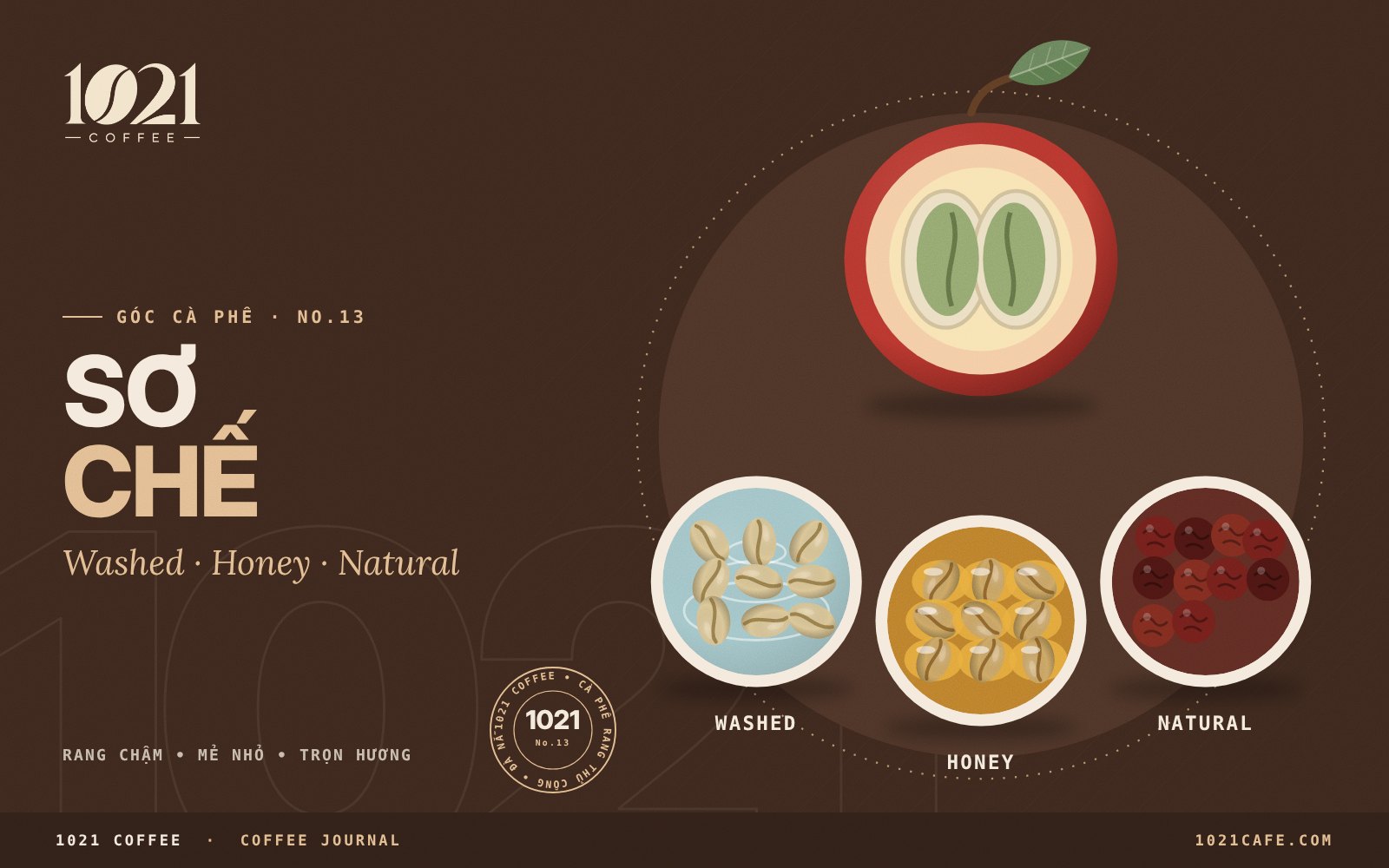
A coffee bean is really the seed of a small fruit, the coffee cherry. After picking, farmers have to remove the skin, the fruit and the sticky layer around the seed, then dry the seed before it can be stored and roasted. How they do this is called processing, and it leaves a clear mark on your cup.
Inside a coffee cherry
From the outside in, a cherry has a skin, a layer of fruit pulp, a sweet sticky mucilage, a thin papery parchment, a fine silver skin and, at the centre, two seeds pressed flat against each other. Each processing method keeps or removes these layers at a different stage.
The three main methods
- Washed: the skin and pulp are stripped off, the seeds are left to ferment so the mucilage breaks down, then they're washed clean and dried. Because the seed is cleaned before drying, washed coffees tend to taste clean and bright and show the character of the variety and origin clearly.
- Natural (dry): the oldest method. Whole cherries are dried in the sun, usually for a few weeks, before the dried fruit is hulled away. The seed picks up sugars and flavour from the fruit, so naturals are often sweet, full of ripe-fruit notes and heavy-bodied, sometimes even winey. Much of Vietnam's Robusta has traditionally been dried as whole cherries.
- Honey: the skin is removed but some or all of the mucilage stays on during drying. The name refers to that sticky, honey-like layer, not to any actual honey. Depending on how much is left and how it's dried, you may see yellow, red or black honey. The cup sits between washed and natural: sweet, rounded, with soft acidity.
Side by side
| Washed | Honey | Natural | |
|---|---|---|---|
| Mucilage during drying | Removed | Partly or fully kept | Whole cherry intact |
| Acidity | Clear, bright | Medium, soft | Low to medium |
| Sweetness | Moderate | High | High, fruity |
| Body | Light to medium | Medium, round | Heavy |
| Watch out for | Uses a lot of water | Needs careful turning while drying | Over-fermentation or mould if dried unevenly |
Tip: If you like clean, bright black coffee, start with washed coffees. If you're after sweetness and fruit, look for naturals or honeys.
There's no "best" method
Each method is a choice, and quality depends far more on care: picking evenly ripe cherries, drying on clean surfaces, turning often and controlling moisture. A carefully made natural can easily beat a rushed washed lot. More recently, some producers have also been experimenting with controlled fermentation to create new flavours.
After processing, the roast does the rest. Lighter roasts keep more of the processing character, while darker roasts mute it; see our piece on roast levels. To taste the difference, brew different beans with exactly the same recipe. Drip bags are an easy way to keep everything else identical.