Plenty of cheap "coffee" on the market is bulked out with roasted soybeans, roasted corn or other grains to cut costs, then given caramel, sugar or flavourings for a darker colour and a stronger smell. A blend isn't necessarily harmful if the label says so, but you deserve to know what you're paying for.
Common giveaways
| Check | Pure coffee usually | Possibly bulked or coated |
|---|---|---|
| Colour of grounds | Brown, light to dark depending on roast | Jet black or unusually glossy |
| Texture | Loose, light, crumbly | Sticky, clumps easily |
| Smell | Natural and fairly gentle | Overpowering, sweet and cloying, or like burnt grain |
| Brewed coffee | Dark, with a reddish-brown glow against the light | Opaque black, almost syrupy |
| Taste | Clearly bitter, with a natural hint of acidity or sweetness | Harshly bitter or sickly sweet, with a short, flat finish |
No single sign proves anything. A very dark roast is also dark and strongly bitter, so look at several clues together.
The cold-water test
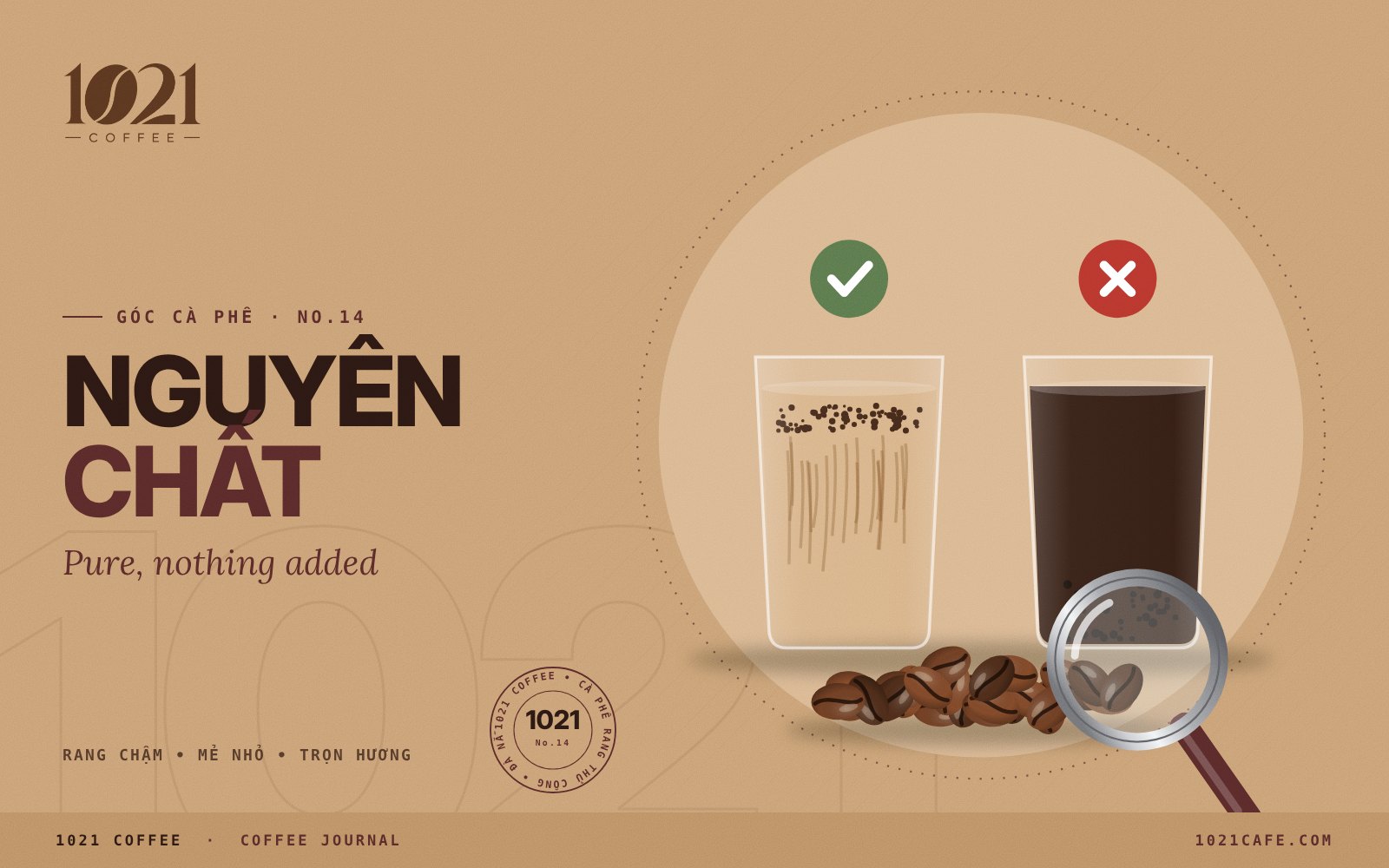
- Fill a clear glass with cold water.
- Sprinkle about half a teaspoon of grounds on the surface. Don't stir.
- Watch for a few minutes.
Pure coffee tends to float at first, because roasted coffee is porous and still holds oil and gas, then sinks slowly while the water colours gradually and stays fairly pale. Coffee bulked with grain or coated in caramel tends to sink faster and darken the water quickly, since burnt sugar and starch dissolve easily.
Tip: Treat this as a rough indication only. Grind size, roast level and freshness all affect the result, and only a lab test can give a definite answer.
Read the label
- Ingredients: look for "100% coffee", or coffee as the only ingredient. Soy, corn, grains, sugar, butter, "coffee flavour" or artificial flavourings mean it's a blend.
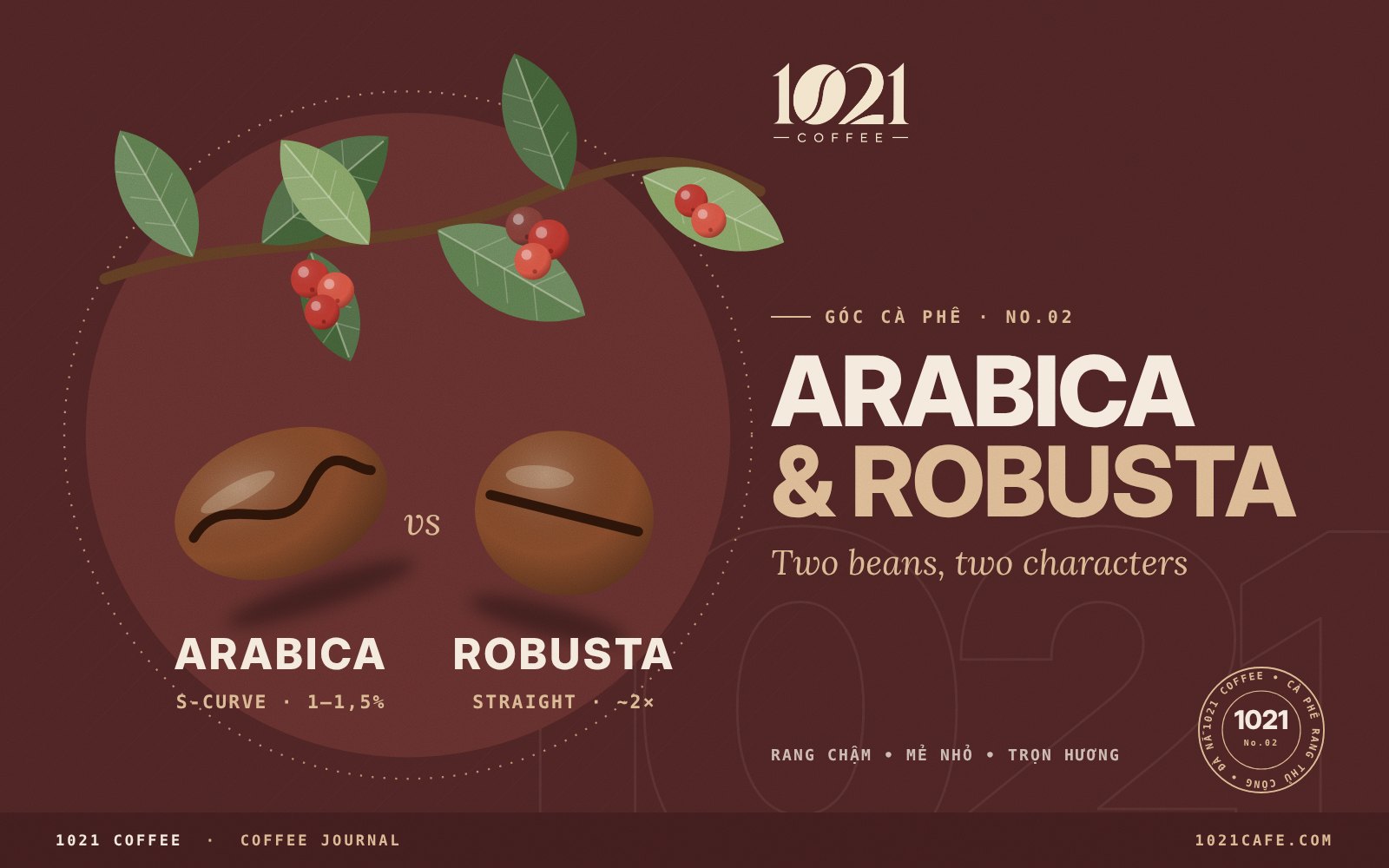
- Species and origin: transparent roasters usually state Arabica, Robusta or the blend ratio.
- Roast date: tells you how fresh it is. See how to store coffee.
- Price: real coffee costs what it costs. A suspiciously low price is worth questioning.
Whole beans are the safest bet
Whole beans are much harder to bulk out than ground coffee. A coffee bean is oval with a groove down the middle, nothing like a soybean or a corn kernel. Be wary of beans that are tacky to the touch and smell of butter, vanilla or candy, as they may have been coated. Dark-roasted beans can look oily too, but that sheen is thin and still smells of roasted coffee. Grind at home, or ask the shop to grind in front of you.
1021 coffee is roasted slowly in small batches with no additives or flavourings. Choose Signature Roast whole beans to grind yourself, or Phin Ground, ready-ground for your phin.