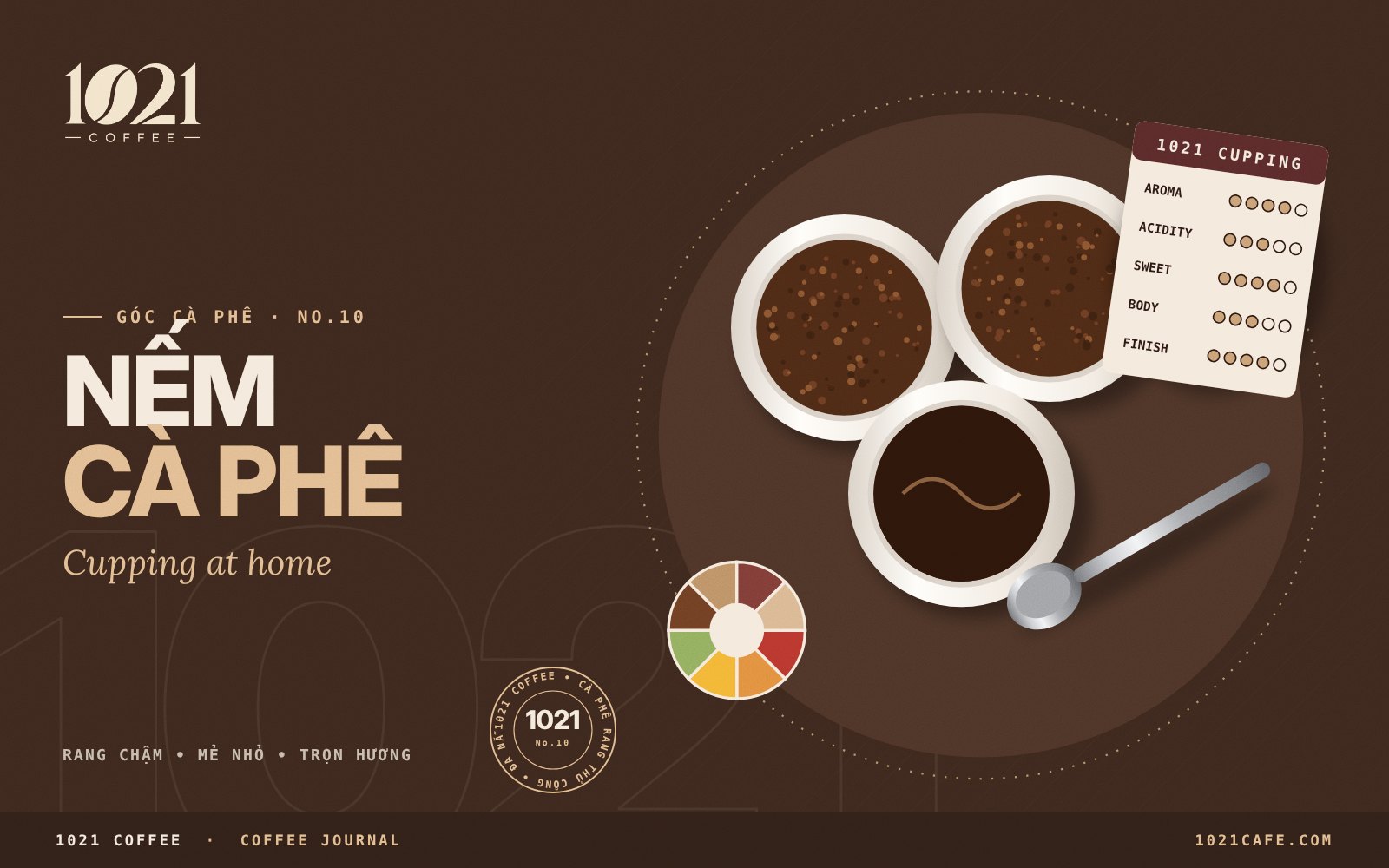
You don't need to be a professional to taste coffee properly. Slow down, pay attention to a few things and take notes, and after a handful of sessions you'll start telling beans, origins and roast levels apart. The best way to practise is cupping, the method coffee professionals use to evaluate beans.
Five things to notice
- Aroma: smell the coffee dry (just ground) and wet (just after the water goes in). What do you get: chocolate, roasted nuts, caramel, flowers, fruit?
- Acidity: not sourness, but brightness, the lively freshness of biting into an apple or an orange. Arabica usually shows more of it than Robusta.
- Sweetness: even without sugar, good coffee has a natural sweetness that can recall honey, brown sugar or ripe fruit.
- Body: how it feels in your mouth, light like tea or full and round like whole milk.
- Aftertaste: what lingers after you swallow. Long and pleasant, or short, bitter and drying?
Simple SCA-style cupping
The Specialty Coffee Association (SCA) has a standard cupping protocol. Here's a pared-down version for your kitchen:
| Variable | Value |
|---|---|
| Ratio | 8.25 g of coffee per 150 ml of water |
| Grind | Coarse, a bit coarser than for pour over |
| Water temperature | About 93 °C |
| Break the crust | At 4 minutes |
- Set up: one identical cup or bowl per coffee, a deep spoon, and a glass of clean water for rinsing the spoon.
- Grind and smell dry: grind each sample into its cup, smell it right away and note the dry fragrance.
- Pour: fill each cup with water at about 93 °C, making sure all the grounds are wet, and start a timer. A crust of grounds will form on top.
- Break at 4 minutes: put your nose close and gently push the crust back with the spoon three times, breathing in deeply. This is when the wet aroma is strongest.
- Skim: use two spoons to lift off the foam and any floating grounds.
- Taste: wait a few minutes for the coffee to cool a little, then take a spoonful and slurp it loudly so it sprays across your palate. Rinse the spoon between samples.
- Keep tasting as it cools: many flavours, especially acidity and sweetness, show up more clearly once the coffee is warm rather than hot.
Tip: Always taste at least two coffees side by side. One cup on its own is hard to describe; next to another, the differences jump out. Try an Arabica against a Robusta, and read Arabica vs Robusta to know what to look for.
A simple tasting sheet
| Attribute | Ask yourself | Sample A (1–5) | Sample B (1–5) |
|---|---|---|---|
| Aroma | What does it smell like? Strong or subtle? | ||
| Acidity | Bright or flat? Which fruit does it remind you of? | ||
| Sweetness | Honey, brown sugar, ripe fruit? | ||
| Body | Light like tea, or full like milk? | ||
| Aftertaste | Long and pleasant, or short and dry? | ||
| Overall | Would you want another cup? |
There are no right or wrong answers. What matters is writing down your own impressions so you can compare them over time.
Getting started
Freshly ground whole beans are best for cupping, since you control the grind. No grinder yet? Brew two different Drip Collection bags side by side. It's less precise, but still a great way to train your palate. Once it clicks, bring the same habits to your everyday pour over.